
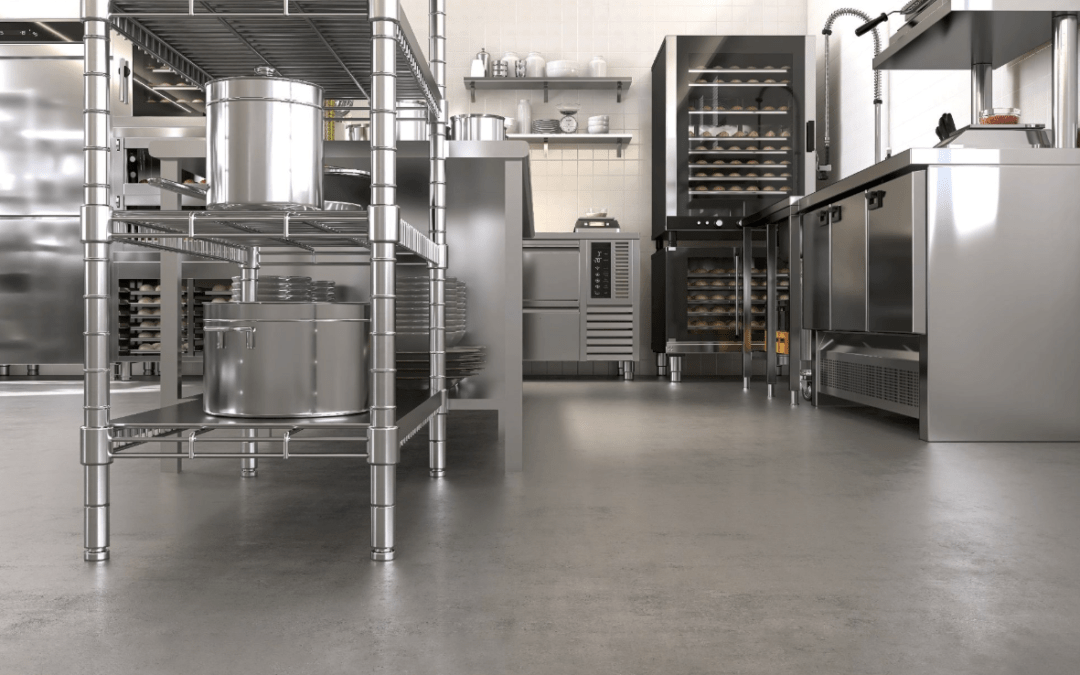
Restaurant ownership comes with a slew of responsibilities. You have to be sure customers are satisfied, workers are happy, and the business is profitable. The last thing a restaurant owner wants is an interior design issue that disrupts business operations. At Marathon Building Environments, our Commercial Interior Designers are happy to share what every restaurant owner must know about commercial kitchen flooring.
Key Features of Commercial Kitchen Flooring
Easy to Clean
No matter the style of restaurant, every commercial kitchen is great at making messes. They see frequent foot traffic, food spills, and grime buildup. What’s important is that your commercial kitchen flooring is easy for workers to clean and resistant to frequent chemical cleaner use.
Safe for Workers
Spills are frequent occurrences in commercial kitchens, but that doesn’t mean slips have to be. Slip-resistant flooring improves worker safety by increasing traction and reducing the likelihood of a fall.
Impact and Thermal Resistant
Commercial kitchen flooring puts up with a lot. From scorching temperatures to hefty industrial cooking equipment, you need to be certain your kitchen flooring is able to withstand it all with only minimal wear and tear.
Match Brand Aesthetics
It’s also important to consider if your commercial kitchen flooring matches your brand and restaurant environment. Especially if the kitchen is within view of customers, you want the flooring to enhance your restaurant’s atmosphere, not look like an eyesore or an afterthought.
Meets Health Code Requirements
Health inspectors hold kitchen surfaces to a higher standard than the rest of your restaurant. Commercial kitchen flooring needs to be nonporous and easy to sanitize so it doesn’t trap grease or food residue between cleanings. Flooring that falls short of this standard can lead to inspection issues down the road, so it’s worth confirming any material you’re considering meets local health code before installation.
Requirements vary by state and county. In Missouri, retail food establishments follow a food code based on the FDA model, and here in our home base of Boone County, a plan review by the Health Department is required before construction begins on any food establishment renovation. Whatever your location, check with your local health department before finalizing a material choice.

Best Types of Commercial Kitchen Flooring
Ceramic Tile Flooring
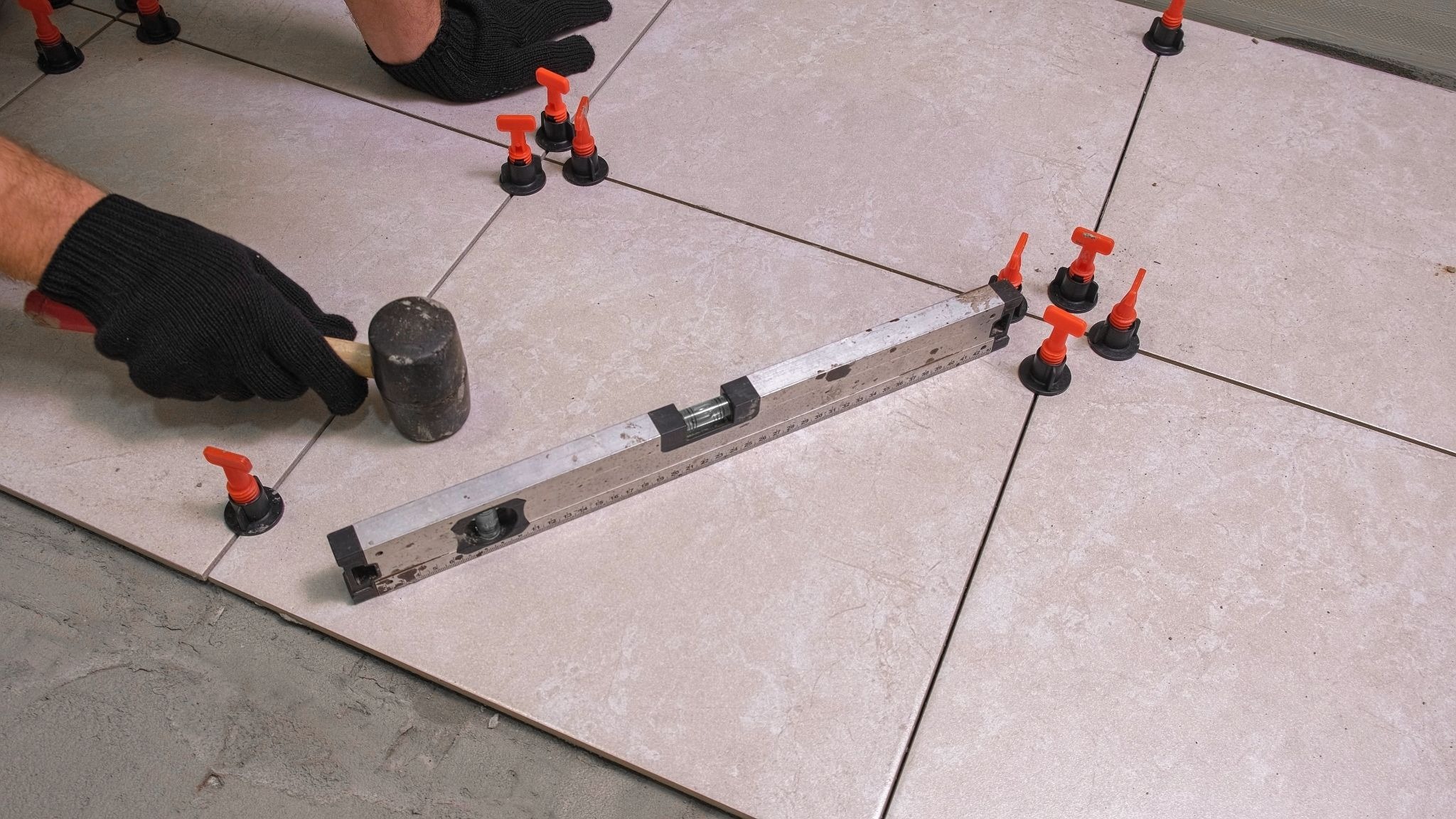
Ceramic tile flooring is a top choice for many commercial kitchens because it is durable, versatile, and aesthetically pleasing. Ceramic tile flooring requires very little maintenance and is simple to clean, making it ideal for commercial applications. Additionally, ceramic tile is easy to customize to fit your exact aesthetic.
Commercial Vinyl Flooring
Commercial vinyl flooring has several benefits, including comfort and slip-resistance, but its main downside is low durability compared to ceramic tile. While vinyl flooring can be a more affordable option initially, being prone to damage from heavy equipment means you’ll likely be paying for repairs before long.
Quarry Tile Flooring
Quarry tile has been a standard in commercial kitchens for decades, and for good reason. Its dense, unglazed surface holds up to heat, grease, and heavy foot traffic while providing good slip resistance. The tradeoff is upkeep. Grout lines require thorough, regular cleaning, and some types of grout may also need periodic sealing to protect against staining and trapped grease or food residue.
Epoxy and Resin Flooring
Epoxy flooring creates a single, continuous surface with no grout lines, so there’s nowhere for grease or moisture to collect. It resists chemicals well and can be customized for extra slip resistance, but it needs a full cure time before your kitchen can reopen, and repairs to a damaged section tend to be more noticeable than with tile.
| Material | Durability | Maintenance |
| Ceramic Tile | Repels moisture, easy to disinfect, great for routine foot traffic | Easy upkeep, preserves itself well against harsh sanitizers |
| Commercial Vinyl | Less durable. May become damaged under heavy equipment | Typically requires repairs over time |
| Quarry Tile | Highly durable; dense, low-absorption, resists abrasion and impact | Higher upkeep; grout lines need regular sealing to prevent staining and trapped bacteria |
| Epoxy & Resin | Highly durable; seamless surface helps resist chemicals and moisture | Low routine maintenance, but repairs to damaged sections are more noticeable |
Factors to Consider When Choosing Commercial Kitchen Flooring
The right choice for commercial flooring often comes down to how your kitchen actually runs day to day. Here are several factors to consider before you decide.
Budget and Long-Term Value
The lowest price per square foot doesn’t typically equal the lowest cost over time. Consider how often each flooring type will need resealing, repairs, or full replacement against the upfront installation cost. Also think about how inconvenient repairs may be for your specific kitchen. Shutting down the kitchen for frequent repairs may be costly for business.
Kitchen Type and Menu
A high-volume fryer station has different flooring needs than a bakery or a prep-heavy kitchen. Heat exposure, grease volume, and water use should all factor into which material makes sense for your space.
Installation Downtime
Some flooring types need days to cure before your kitchen can reopen, while others can be installed in sections to keep the business running. Ask your flooring consultant how much downtime to expect during installation and potential future repairs before you commit.
Local Health Code Requirements
Health departments vary by city and county, and some have specific rules for kitchen flooring materials, drainage, and wall-to-floor transitions. Confirm your local code requirements before finalizing a commercial flooring choice for your business.
Commercial Kitchen Flooring FAQs
How much does commercial kitchen flooring cost?
The cost of commercial kitchen flooring depends on the material, square footage, and the condition of your existing subfloor. Ceramic tile and vinyl tend to land in the middle of the price range, while quarry tile and epoxy can cost more upfront. A flooring consultant can give you an accurate quote after assessing your space.
How long does commercial kitchen flooring installation take?
Most installations take anywhere from a few days to about a week, depending on the size of the kitchen and the material chosen. Tile installations typically move faster than epoxy, which needs cure time before the kitchen can reopen for service.
What is the best flooring for a commercial kitchen?
Ceramic tile is one of the most reliable choices for commercial kitchens because it holds up to heat, moisture, and heavy traffic while staying easy to sanitize. However, commercial vinyl, quarry tile, and epoxy and resin are also great options for commercial kitchens. The right material ultimately depends on your kitchen’s layout, menu, and budget.
Can commercial kitchen flooring be installed without closing the restaurant?
In many cases, yes. Flooring can often be installed in sections during off hours or slower business periods to limit disruption to service. Ask your flooring consultant about a phased installation plan built around your hours.
Choose Marathon Building Environments to Install Your Commercial Kitchen Flooring
At Marathon Building Environments, we offer ceramic tile flooring installation in Columbia, MO and throughout mid-Missouri, using top tile brands you know and trust. Working with one of our Solutioneers will save you time and money by answering your questions and streamlining the decision-making process. Contact us today for help with your commercial kitchen flooring installation, or any interior design project you have!