
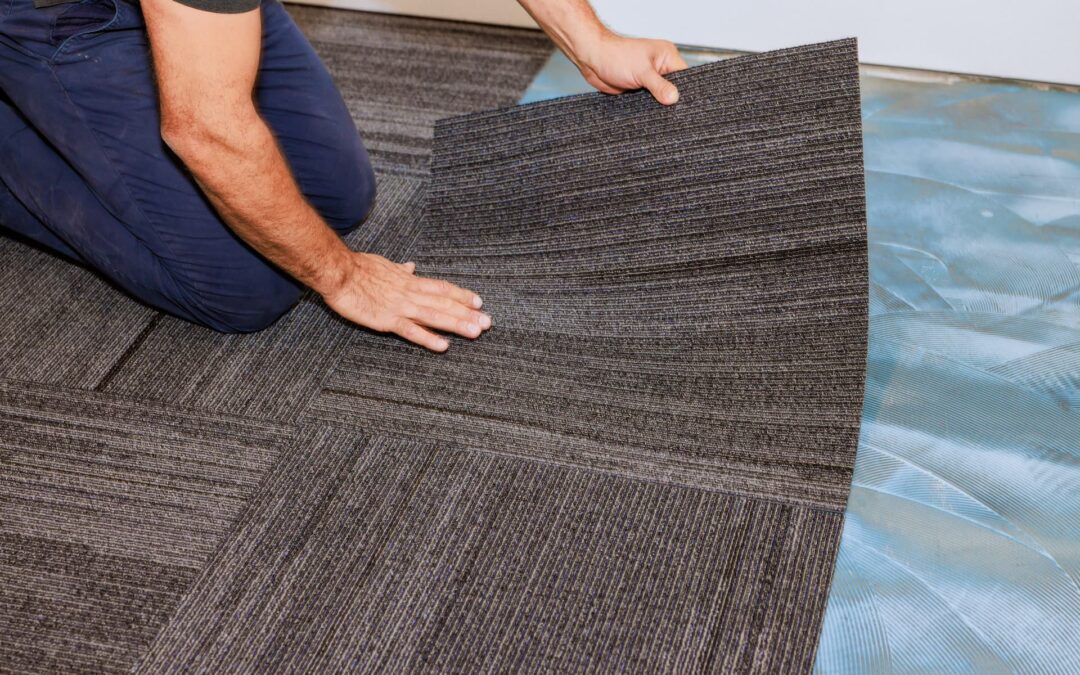
The best commercial flooring depends on the zone and performance of the flooring. Several metrics factor into performance such as durability, fire resistance, how long flooring can retain its look, and slip resistance that factor in performance. Once you know the zone for your flooring like office, entry, bathroom, or lobby, you’ll know what performance standard it should meet. We give you the tools below to find the best high-performance flooring for your commercial space.
Table of Contents
- What Does “High-Performance” and “Zone” Mean in Commercial Flooring
- Durability
- Appearance Rating
- Slip Resistance
- Commercial Flooring Fire Protection
- Conclusion
What Does “High-Performance” and “Zone” Mean in Commercial Flooring
By “zones,” we mean distinct areas like lobbies, entrances, kitchens, offices, bathrooms, break rooms, classrooms, and hallways. The best high-performance commercial flooring depends on the zone it’s for: the flooring needs of an office, for example, are different from the needs of a high traffic entrance. By “high-performance” we mean commercial flooring that measures up to standards such as durability under traffic, how long a floor retains its look, slip resistance, and fire resistance for the zone. Below, we look at each high-performance metric to determine which commercial flooring is best.
Durability
Durability is commercial flooring’s ability to resist wear and damage from things like foot traffic, chairs, furniture legs, and dropped items. When flooring types differ in how they fail under traffic, so do their standards for durability.
Vinyl Flooring Durability Testing
There’s a clear layer on top of a bottom design layer for vinyl flooring. The clear layer handles the traffic and is measured in mils. According to Armstrong’s product sheet, per ASTM, 20 mil (0.5 mm or .020 inch) is the minimum for commercial use for their vinyl tile product (ASTM sets standards for products like commercial flooring). For vinyl durability tests, the test comes down mostly to the clear layer at the top.
Wood Flooring Durability Testing
By contrast, wood flooring fails by denting and so uses a dent test to measure durability. The dent test takes a steel ball 11.28 mm in diameter and presses it into the wood. The amount of force, measured in newtons, it takes to press the ball halfway into the wood determines its durability. Here are a few examples from Penn State measured in newtons (N):
- White Ash – 5900 N
- N. Red Oak – 5700 N
- Black Cherry – 4200 N
- Douglas-fir – 2900 N
- Basswood – 1800 N
Appearance Rating
A durable floor does not always mean a good-looking floor. Vinyl can lose its color, and carpet can become matted and worn.
Carpet Appearance Testing
Carpet’s appearance test is called TARR (Texture Appearance Retention Rating). It has a 1 to 5 scoring system, with lower numbers meaning more damage and higher numbers meaning less. Carpet is attached to the walls of a dryer-shaped testing device. Then, a heavy 8.4-pound metal tumbler is placed in and allowed to bump against the carpet-lined walls as the drum spins. The tumbler is meant to simulate footsteps, wear and tear. After a set number of rotations, specialists evaluate the carpet and give it a rating. Below are TARR ratings to aim for depending on the zone.
| Zone | Traffic class | TARR |
|---|---|---|
| Lobbies | Severe | 3.5+ |
| Entrances | Severe | 3.5+ |
| Hallways | Severe | 3.5+ |
| Classrooms | Heavy | 3.0+ |
| Offices | Moderate | 2.5+ |
Vinyl Appearance Testing
Labs test vinyl color fading using a spectrophotometer. That instrument can measure the color differences between brand new vinyl and vinyl exposed to a xenon-arc lamp, which simulates sunlight. ΔE, or delta E is the unit of color difference. Delta stands for difference, and E for Empfindung, German for sensation. So, ΔE measures the difference between two colors. The higher the ΔE, the easier it is to tell the color difference, and the lower the number the harder it is.
Slip Resistance
To reduce injuries in commercial establishments, slip-resistant flooring is a top consideration.
The DCOF
The dynamic coefficient of friction (DCOF) is a measure of floor grip. The test often involves wetting the floor with water and a bit of soap. A box-shaped device is then placed on the floor to do the measurement, such as a BOT-3000E tribometer. It drags a rubber foot across the floor and measures the resistance. That resistance translates to the DCOF. A higher DCOF number means more grip, and a lower number means less. However, many other factors affect how slippery flooring is besides the DCOF like surface contaminants (e.g. grease), if the flooring is sloped, how fast someone is walking, and the drainage of the surface. The DCOF is a helpful but imperfect measure rather than the end of the story on flooring slip resistance.
Product Category Determines the Recommended DCOF Value
Depending on the flooring zone, you may want more or less slip resistance. A locker room should have more slip resistance than areas that are always dry like offices. ANSI A326.3 (ANSI is the American National Standards Institute) lists product use categories that map to flooring zones. Examples include ID for “Interior, Dry,” IW for “Interior, Wet,” and O/G for “Oils/Greases.” Below is a chart of DCOF values per zone. When you see wet or dry next to DCOF values, that’s because some tests are on dry, not wet floor.
| Zone | Category | DCOF |
|---|---|---|
| Entrances | Interior, Wet (IW) | 0.42+ wet |
| Bathrooms (no showers) | Interior, Wet (IW) | 0.42+ wet |
| Locker rooms | Interior, Wet Plus (IW+) | Manufacturer declared rating, otherwise 0.50+ wet |
| Commercial kitchens (grills, fryers) | Oils/Greases (O/G) | Manufacturer declared rating, otherwise 0.55+ wet |
| Lobbies | Interior, Dry (ID) | 0.42+ dry |
| Offices | Interior, Dry (ID) | 0.42+ dry |
Commercial Flooring Fire Protection
Where slip resistant floors help prevent falls, fire resistant floors help people make it safely to the emergency exit. Purchasing fire resistant flooring is a great way to protect not only your flooring but the structures on top of and around it.
Carpet Fire Resistance and the Pill Test
To test carpet fire resistance, testers cut 8 small square pieces (9 x 9 in.) of carpet to use as samples. They put each in a box that won’t burn, and rest a metal plate with a wide circular opening over the top. In the center and on top of the carpet, is placed a 6mm wide tablet (pill) of methenamine that is then lit. When all burning stops, testers measure the distance between the char closest to the metal edge. The distance between the char and edge must be an inch or more for the carpet to pass the test. Seven of eight carpet samples need to pass according to 16 CFR Section 1630.4. Otherwise, that carpet can’t be sold in the US.
Flooring Classes by Zone and the Radiant Panel Test
Beyond meeting the minimum threshold for sale in the US, carpet and other flooring may also receive different fire class ratings. The ratings are Class I and Class II. Testers heat up with an angled heater and light the heated end of a rectangular sample of flooring. The length of the burn from the hotter end of the sample determines the Class, with burns extending further tending towards Class II, and shorter burns tending towards Class I. A Class I rating is more fire resistant than a Class II rating. See recommended flooring fire class ratings below for the different zones. To see what fire class your flooring needs, check Section 804 of the international Building Code or ask us for help.
Conclusion
High-performance commercial floors cater to the needs of the zone they are placed. Some need to place a high emphasis on slip resistance, others on fire resistance. If you’d like help choosing the right commercial flooring for your zone, let our experts guide you. Reach out today to see how we can help you choose the best flooring that meets all of your zones’ requirements.